
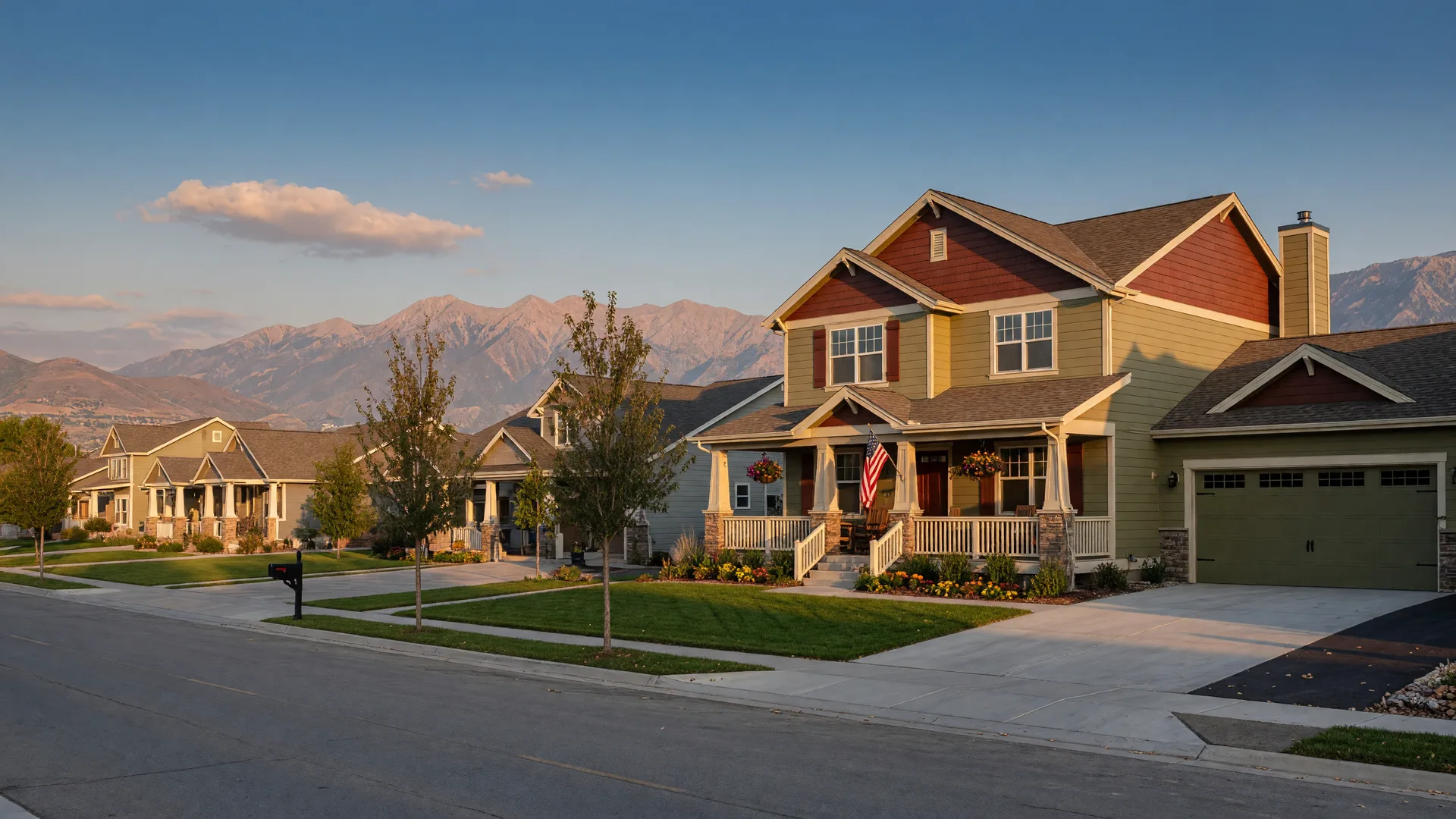
This post is for growing families and townhome owners who are starting to picture themselves in a single-family home: a real yard for the kids or the dog, an extra bedroom or two, more privacy between neighbors, and a garage that actually stores things. Upsizing is a big financial and lifestyle decision, and timing matters, but the honest answer is that no single answer fits everyone. What we can do is lay out what the late-September 2026 Utah market actually looks like, what to weigh before you commit, and how the move-up process works, so you can decide on facts instead of a gut feeling.
What Does the Utah Market Look Like Right Now?
Let us start with the numbers, hedged up front: every figure below comes from a named public source, varies by source and market segment, and changes month to month. Treat it as a snapshot of late September 2026, not a guarantee for your address.
- Home values: Utah's average home value was around $534,000, up roughly 1.5 percent year over year as of late August 2026, according to Zillow.
- Median sale price: Salt Lake County's median sale price was around $568,000 over the most recent three months, roughly flat year over year, according to Redfin market data through mid-2026.
- Inventory: Statewide active listings were running at roughly 15,000 or more, with more inventory than in recent years, according to Realtor.com data reported via firsthomeutah.com in September 2026.
- Pace and competition: Homes are taking longer to sell and seeing fewer offers than they did in 2021 and 2022. In Salt Lake County, homes sat on the market around 34 days, per Redfin.
- Mortgage rates: The 30-year fixed mortgage was hovering near 7 percent in September 2026, with forecasts from Bankrate, The Mortgage Reports, and MortgageDaily mostly calling for rates to stay in the 6 to 7 percent range through the end of the year. Forecasts vary and rates move weekly, so treat the range as direction, not a promise.
Put together, that is a market that has swung from the frantic 2021 and 2022 seller's market toward something more balanced. More inventory means more choices and less competition for buyers, which is good news if you are looking to upgrade. But higher rates mean a bigger monthly payment, and the difference between your current townhome payment and a single-family payment can be significant at these rate levels. That gap is the real math of this decision, and it is why we will spend most of this post on what to consider before you move.
Is It a Buyer's or Seller's Market?
In most Wasatch Front neighborhoods right now, it is not either, not in the extreme sense. More active listings statewide and longer days on market give buyers more negotiating room than at any point since the pandemic boom. Sellers who price realistically and present their home well are still getting offers, just on a normal timeline instead of a feeding frenzy.
Here is the twist that matters for you specifically: as a move-up buyer, you are on both sides at once. You are a seller of your townhome and a buyer of a single-family home. A softer market can work in your favor there, because the home you are buying is likely dropping or holding relative to the home you are selling, and both are moving in the same wind. The monthly payment is the part that is not neutral, because rates are near 7 percent no matter which side of the trade you are on. So the honest framing is: conditions favor a patient, prepared move-up buyer, but only if the new monthly payment fits your life comfortably.
What Should I Consider Before Making the Transition?
Before you look at a single home, work through this list. It is the same one we walk families through in our own conversations, because the decision that feels right in a model home can look very different in next month's bank statement.
How Much Will My Monthly Payment Jump?
This is the first and most important question. Run the real number with today's rate: purchase price, down payment, property taxes, insurance, and HOA if the new home has one. The price gap between a townhome and a single-family home in the same area can be substantial, and at a rate near 7 percent, every $50,000 of price adds meaningful dollars to your monthly payment. If the new payment leaves less than a comfortable buffer for savings, vacations, and surprises, that tells you something about the size of home you should be looking at, not that you should stop looking.
How Long Do I Plan to Stay in the Next Home?
Buying and selling both carry real closing costs, and the equity you expect to build only pays those off over years. If you see yourselves in the next home for five years or more, the transaction costs spread out and the move makes financial sense. If there is a chance you will relocate in two or three years, the math gets much harder, and renting a single-family home while you wait may deserve a place on the table.
What About HOA Dues Today Versus Future Upkeep?
Townhome living means HOA dues, and part of what you pay for is someone else handling roofs, exteriors, and common areas. A single-family home often has lower or no HOA dues, but you inherit the work and the cost: a yard to maintain, a roof and siding that will eventually need replacing, and appliances and systems that you own outright. Add up what maintenance truly costs a homeowner over a decade, and the comparison to HOA dues gets more honest. Neither is better or worse, they are just different jobs, and one of them follows you home every Saturday.
How Much Equity Have I Built in My Current Home?
If you bought your townhome before the last few years, your equity is likely your biggest asset, and it can become your down payment on the larger home. Get a current sense of what your townhome would sell for, subtract what you still owe, and you have your working number. Just remember that equity is not cash until you close, and the sale proceeds arrive only after the transaction is done. That timing is exactly what the move-up process is designed to manage, which we will get to below.
New Construction or Resale: Which Fits Better?
Utah's Wasatch Front has an active new-construction pipeline, from Daybreak and South Jordan to Herriman, Lehi, and Saratoga Springs, alongside established resale neighborhoods in Sandy, Draper, and Highland. New homes often offer floor plans sized for a growing family, energy-efficient systems, and builder incentives; resale homes offer established trees, mature neighborhoods, and sometimes a better location for the same money. Adam holds a New Home Construction certification, so whichever route you lean toward, make sure the timing and incentives are compared apples to apples, especially whether builder financing or rate buydowns actually lower your real payment.
Do the Schools, Commute, and Lifestyle Still Work?
A bigger home does not matter much if the school assignment, the morning commute, or the walk-to-everything lifestyle you love in your townhome quietly gets worse. List what you actually use today: the trail network, proximity to work, after-school activities, grandparents nearby. Then check those same things at the neighborhoods you are considering, at the times of day you would actually experience them. Lifestyle changes are the easiest part of this decision to romanticize and the hardest to undo.
Am I Ready for the Emotional Side of More Space?
More space and more responsibility. A yard is joy for some families and a chore for others. A bigger house means more rooms to furnish, heat, clean, and organize, and more home to maintain when you would rather be at a soccer game. Talk honestly as a household about who takes care of what. The families who tell us they are happiest with an upsize are usually the ones who went in with clear eyes about the work, not just the square footage.
Am I Moving for Lifestyle, or Because It Feels Expected?
This is the question nobody asks out loud. There is a script in many neighborhoods and family circles that says the endgame is a single-family home, and it is worth checking whether that script is driving you. If you genuinely want a yard, more rooms, and more privacy, this move is for you. If your current home works and you mostly feel societal pressure, the most expensive mistake in real estate is buying a home you did not really want. Neither path is wrong, but make sure the decision is yours.
How Does a Move-Up Work in Practice?
Once the decision feels right, the mechanics are straightforward, and having a plan before you start matters more than having perfect timing.
Sell First or Buy First?
This is the classic move-up question. Selling first means you know exactly what you have to work with and can make a clean, contingent-free offer, but it can mean moving twice or finding temporary housing. Buying first means you never leave your home, but you may carry two mortgages if the timing overlaps. Bridge financing and home-equity lines can smooth the gap, and a well-structured offer contingency can protect you either way. There is no universally right answer, it depends on your cash position, your market, and your tolerance for complexity, which is exactly why a move-up plan should be worked out with an agent and a lender before you start touring.
Get Pre-Approved and Organized Early
With rates near 7 percent, your buying power is set by your rate lock, your down payment, and your debt-to-income ratio, all of which you want nailed down before you fall in love with a house. Get pre-approved with a local lender, gather your tax returns, pay stubs, and asset statements, and decide on your down payment, including how much of your townhome equity you plan to use. An early pre-approval also signals to sellers that you are a serious, ready buyer, which matters in a market where offers still get competed over on terms even when the frenzy is gone.
What Should I Look For in a Single-Family Home?
Beyond bedrooms and bathrooms, shop for the things that are expensive to change later: a lot that suits how you live, a layout that works for your family's actual routines, storage that is real and not just decorative, and expansion potential if you can imagine adding on. Check the direction the yard faces, the condition of the roof and mechanicals, and whether the neighborhood is still building out, because construction next door affects your view, noise, and eventual resale. A good floor plan you can live in comfortably beats a slightly larger one you have to rearrange.
Why Does a Team That Knows Both Sides of the Wasatch Front Matter?
A move-up often crosses city and even county lines: the right resale in Sandy, an active-adult shift in Daybreak, a new build in Herriman or Saratoga Springs, a school catchment in Draper or Highland. We work Daybreak, South Jordan, Herriman, Draper, Lehi, Saratoga Springs, Sandy, and Highland every week, and we price from current sold data in the specific neighborhood, not a county average. Because Adam and Natalie handle both the sale of your townhome and your purchase, you get one team tracking the whole trade, which matters when the two sides move on different timelines.
What Should I Check Before I Commit?
A short, practical checklist before you sign anything:
- Check your townhome's current market position. What are comparable units actually selling for this month, and how many days are they taking? That is your realistic starting point.
- Get current numbers from a local agent. A ten-minute conversation with someone who sells in your building and your target neighborhood beats a weekend of online estimates.
- Run the real monthly payment at today's rate. Use a current quote from a lender, including taxes, insurance, and HOA, and compare it line by line with what you pay today.
- Talk to a local lender. Confirm what you qualify for, what a rate lock costs, and whether you can use your equity before your townhome sells.
- Visit neighborhoods at different times of day. Drive by on a weekday morning, a weekday evening, and a Saturday. Traffic, parking, school pickup, and noise all show up on the second or third visit.
So, Is Now the Right Time for Your Family?
Every situation is different, and we mean that literally, not as a hedge. For a family with stable income, solid equity, a five-plus-year horizon, and a genuine pull toward more space, the current market is a reasonable one to make that move: more inventory, less bidding-war pressure, and a broader selection than buyers have seen in years. For a family stretched by today's rates, with an uncertain timeline or doubts about the upkeep, waiting until the numbers fit is not a failure, it is a financially healthy decision. The right time is a blend of market conditions and your family's readiness, and only you can weigh the second half.
If you would like to talk it through, that is exactly what we are here for. Book a call with Adam and Natalie, no pressure and no obligation, and we will look at your townhome's position, run the real numbers on a move-up, and help you see what your options actually look like this fall.
Rates, home values, and market data change constantly, and the figures above are approximate, dated, point-in-time snapshots from the named public sources. Check current numbers with a lender and a local agent before making any decision. Fair Housing protections apply to every transaction we handle.
Sources
- Zillow Home Value Index (late August 2026): Utah average home value around $534,000, up roughly 1.5% year over year.
- Redfin Salt Lake County housing market page (data through mid-2026): median sale price around $568K over the most recent three months, roughly flat year over year; homes around 34 days on market.
- Realtor.com data via firsthomeutah.com (September 2026): statewide active listings around 15,000 or more, more inventory than recent years.
- Bankrate, The Mortgage Reports, and MortgageDaily (September 2026): 30-year fixed mortgage near 7%, with most forecasts in the 6-7% range through year-end. Forecasts vary and rates move weekly.